

Essays from the Reliqio product studio on designing AI products people keep using: LLM streaming UX, AI search (RAG), healthtech AI and front-end performance, with original benchmarks.
What it costs
- Free tier
- Yes
Free to read — no paywall, account gate or price appeared on any page read. Reliqio Insights is the editorial arm of Reliqio, a product studio selling technical co-founder services for AI B2C startups, so the writing is the studio's marketing; no service pricing is published on the site.
Prices checked on 12 October 2026Source

About Reliqio Insights
Reliqio Insights: A Product Studio's Notes on Building AI People Keep Using
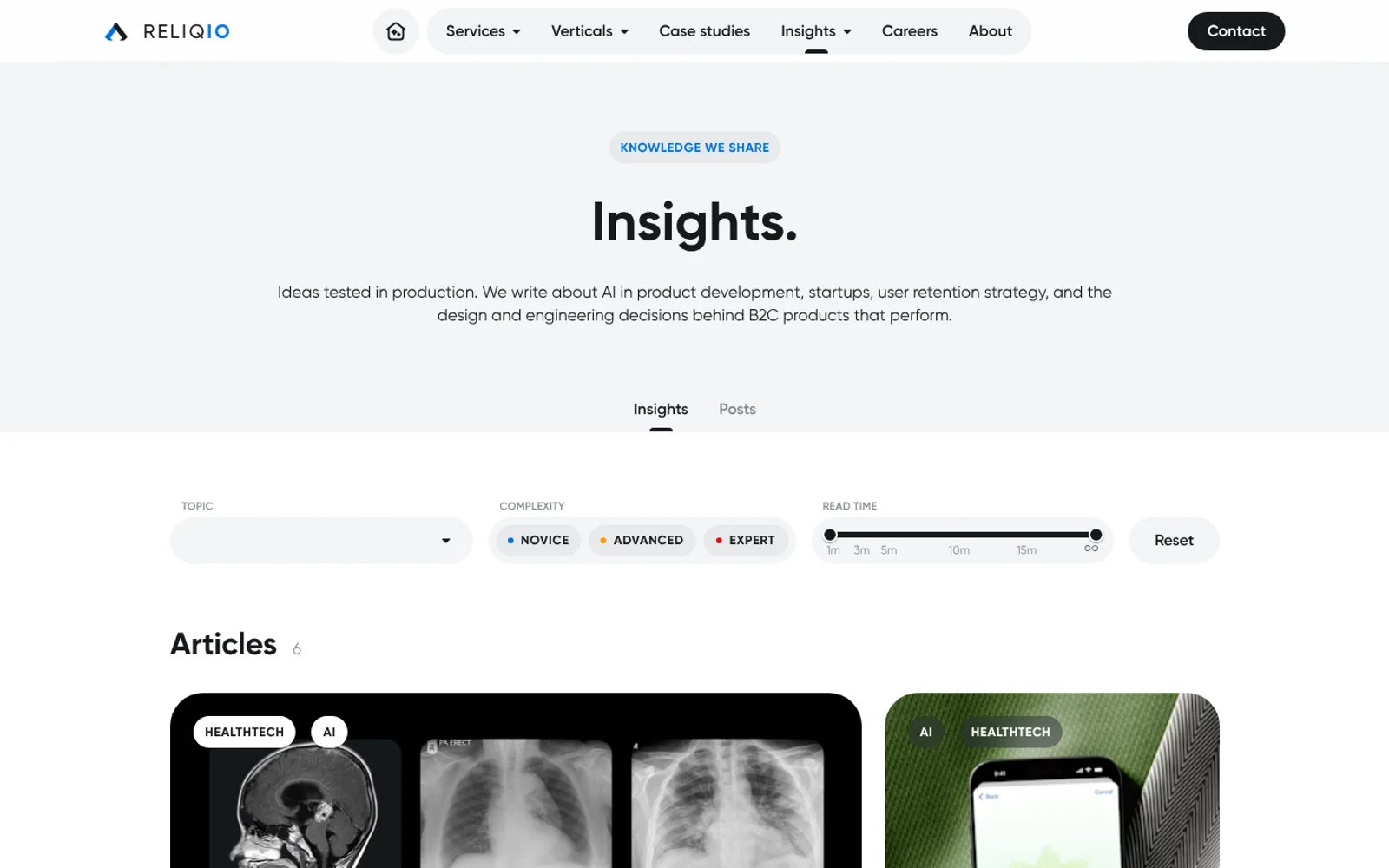
Reliqio Insights is the editorial arm of Reliqio, a product studio that positions itself as a technical co-founder for AI B2C startups. It is a small, deliberately technical library covering the awkward middle ground between design and engineering on AI products: how streaming changes the feel of an LLM interface, what retrieval-augmented search actually does for a business, how AI is used on X-rays and in mental health tools, and why a long JavaScript task ruins an animation. Articles are bylined, carry a reading time and a difficulty level, and at least one of them reports original testing rather than recycling someone else's numbers.
Key Features
- Named authors — Pieces carry a photo, a name and a LinkedIn link; the rendering-performance article is written by Vladimir Barsuchenko, Reliqio's founder.
- Original model testing — The LLM streaming article runs 1,000 unique prompts across GPT, Gemini and Llama and publishes the comparison.
- Filter by time, level and topic — The hub filters on reading time, on difficulty from novice through expert, and on tags such as ai, healthtech, development and web.
- Stated difficulty — Every article declares whether it is a primer or a deep dive before you commit to it.
- Range across the stack — Healthtech AI, RAG search, LLM interface design and front-end rendering performance sit side by side.
- Free to read — No paywall, no account, no newsletter wall.
What's Actually in It
At the time of writing the hub lists six articles, all published on the same date. Two are approachable primers — a four-minute piece on where AI is taking mental health support, and a five-minute one on using AI to classify X-rays when a clinic runs short of radiologists. Three are pitched at an advanced reader: a nine-minute piece on whether AI can read psychological state from wearables, text, audio and video; a six-minute explainer on AI corporate search and what RAG changes; and a six-minute argument that a B2C AI product without streaming is leaving retention on the table. The sixth, labelled expert, is a straight engineering piece on how long JavaScript tasks block rendering and how yielding fixes it. It is a narrow library rather than a broad one, but the pieces are substantial and the difficulty labels mean you can tell which is which before clicking.
The Benchmarks Are Real
The claim worth checking on any studio blog is whether it does original work or restates the industry's received wisdom. The LLM streaming article does the former. It sets out three hypotheses, then describes a test across GPT, Gemini and Llama run over 1,000 unique prompts, and reports what it found: GPT returning an initial response about 25% faster when streaming, completing around 3% faster, and delivering roughly 20% higher token throughput — but, as the piece puts it, at twice the price. There are further sections on security and on where Llama fits. Whether you accept the methodology is your call, and the article does lean on third-party conversion statistics from the likes of Rakuten and Vodafone to set up its business case first, but the comparison itself is their own.
The Separate Posts Feed
Alongside the articles, Reliqio runs a shorter Posts feed that is closer to a social timeline than a blog: video explainers, carousels and client clips. The entries there include a neat formula for matching inner and outer corner radius, before-and-after breakdowns of four product redesigns, a client CTO's video review, and a short analysis of how Airbnb's interface converts trust into bookings. It is lighter material and serves a different appetite from the long-form articles, so it is worth knowing the two sections are not the same thing.
Where It's Coming From
Reliqio builds AI consumer products for clients across AI, fintech, health and eCommerce, and publishes a detailed case-study library alongside the writing. The blog is the studio's editorial front door, which shapes what gets covered: the topics track the studio's own practice areas, and the business case for hiring a team like theirs is rarely far from the surface. That is normal for a studio publication and it does not undercut the technical content, but it is worth reading with the context in mind — particularly in pieces that open by establishing why retention and performance are worth investing in.
How to Use It
- Open the Insights hub and filter by reading time if you only have a few minutes.
- Use the difficulty filter to separate primers from engineering deep dives.
- Filter by tag — ai, healthtech, development, web or processes — to stay in one lane.
- Start with the LLM streaming article if you want the original testing rather than the overviews.
- Check the Posts feed separately for short video and carousel content.
Who It's For
- Product designers working on LLM interfaces who need to understand streaming as a UX decision, not just a technical one
- Founders weighing what AI actually changes about retention in a consumer product
- Front-end engineers chasing rendering jank and long tasks
- Teams exploring RAG and AI search who want a plain explanation of the business case
- Anyone working on healthtech AI who wants grounded examples rather than speculation
Conclusion
Reliqio Insights is a small library doing a few things unusually well for a studio blog: it names its authors, labels its difficulty honestly, and in at least one case publishes a test it ran itself instead of borrowing conclusions. Six articles is not a deep archive, and the writing naturally serves the studio behind it. But if you are building an AI consumer product and want to read about streaming, retrieval or rendering performance from people who have shipped them, it is a worthwhile bookmark — and the LLM streaming piece is the one to read first.
Featured Tools
Sponsored
Artlist
Royalty-free music, SFX, 8K footage, templates, LUTs and 100+ AI models on a single subscription for video creators.

Icons8
Large icon packs featuring over 10,000 icons for consistent design themes.

Vidu
AI video generator with text, image and reference-to-video modes, producing 3–16 second clips at up to 1080p with characters that stay consistent across shots.
Your tool here
The tools above are our own picks until the slots sell.
Spotlight
SponsoredRotates daily
Business Characters
Detailed and vibrant 3D people illustrations to enhance your work.
More Blogs Tools

Adobe Blog
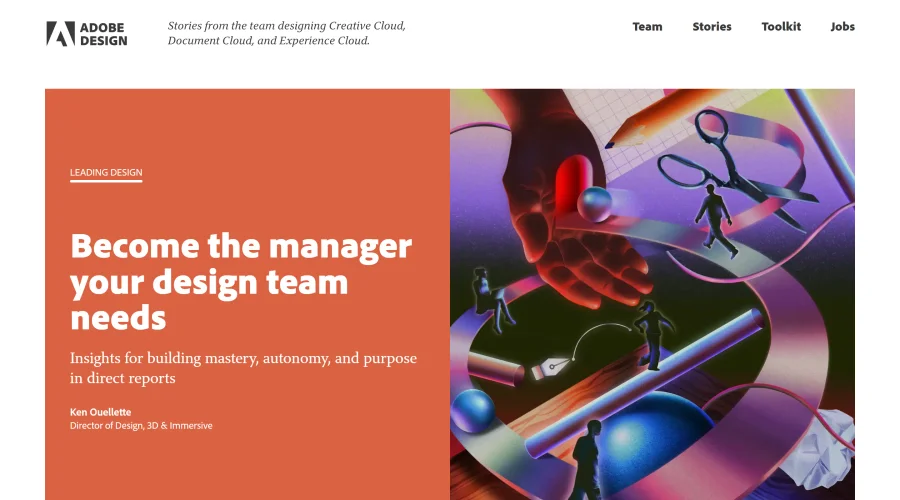
Insights from the team behind Creative Cloud, Document Cloud, and Experience Cloud.

Airbnb Design
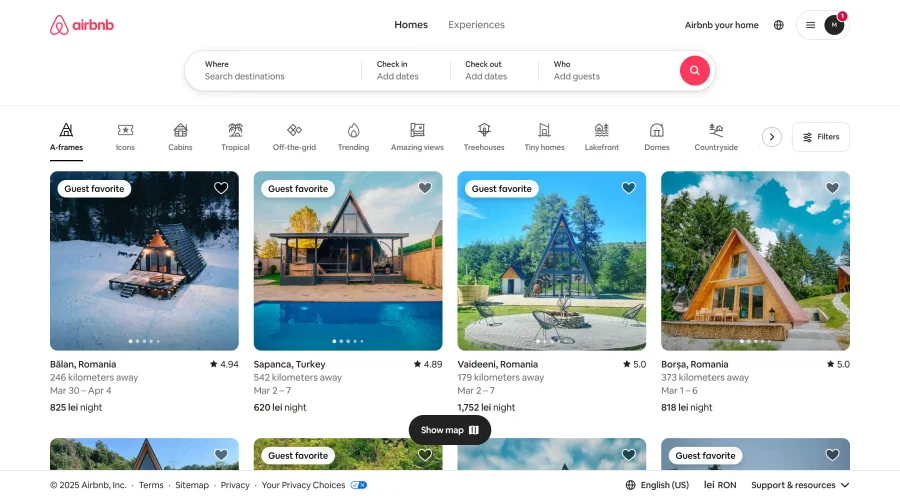
Stay updated with Airbnb's creative team and their design journey.

Apple & Banana
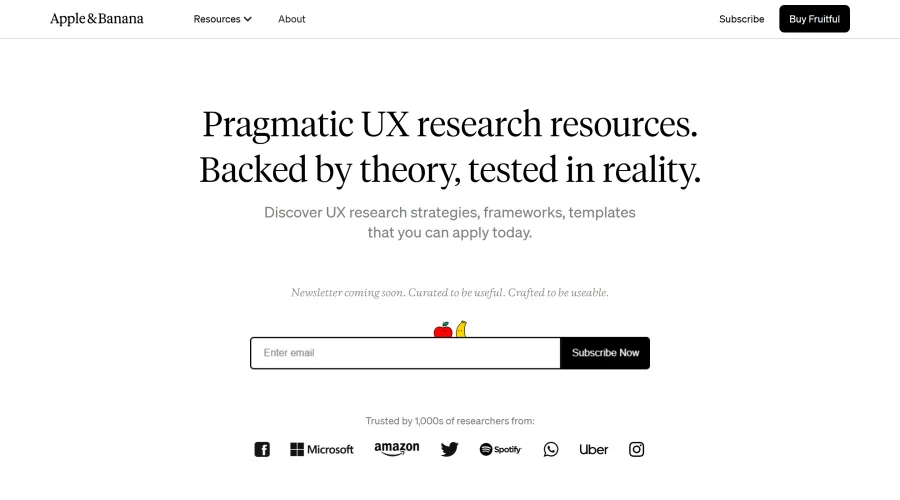
A space for user researchers to share and learn.
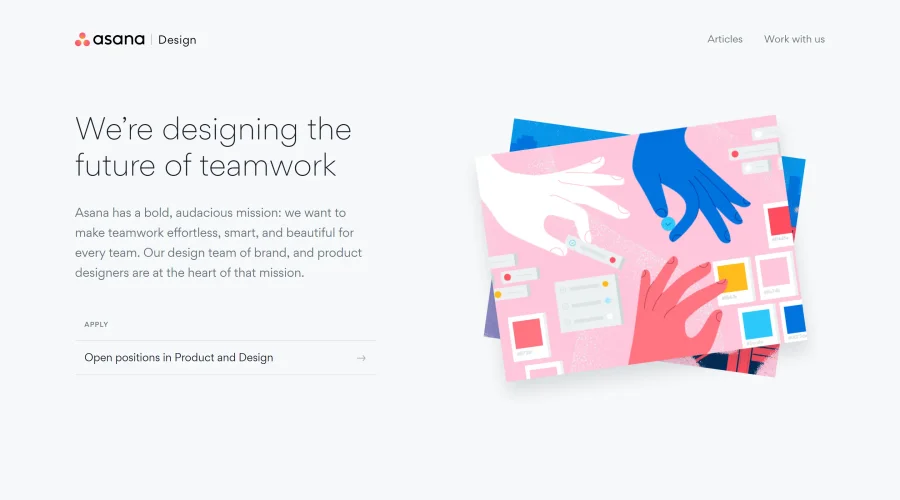

Asana Design
Innovative approaches to designing for teamwork.
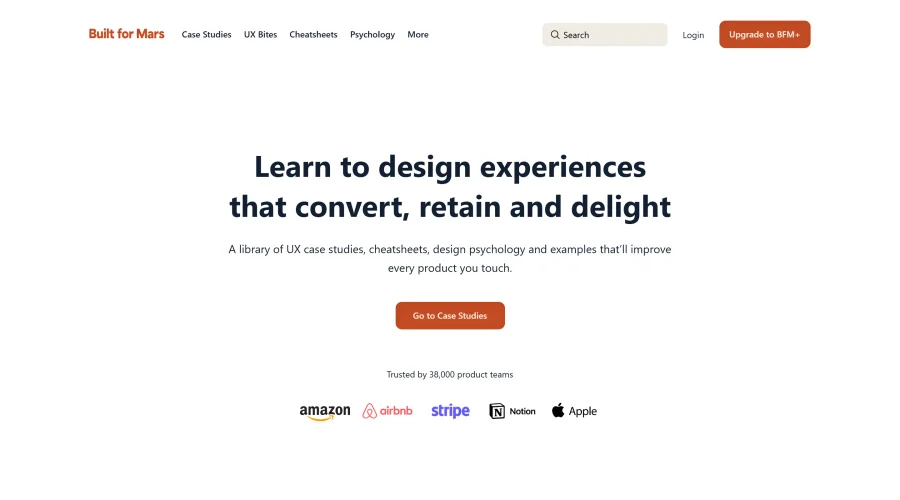

Built for Mars
Research-driven case studies packed with insights from thousands of hours.
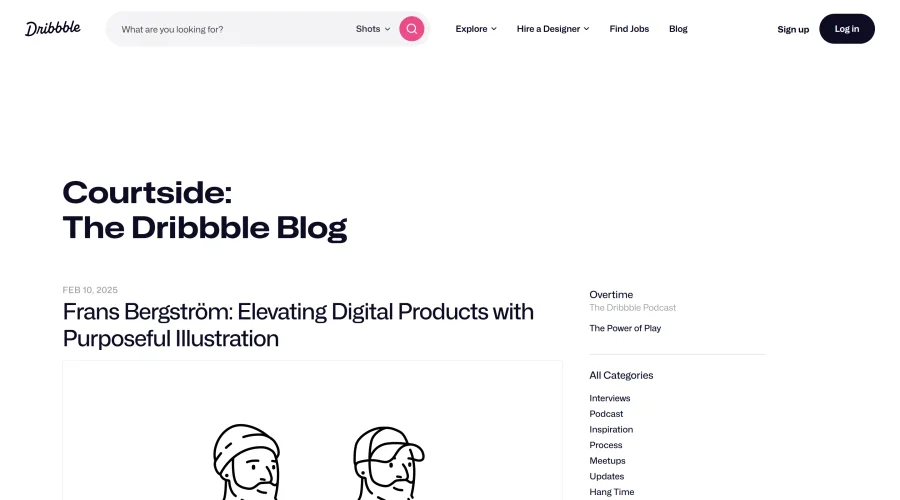

Courtside
Engaging stories about designers, freelancing, and various design topics.
Explore Other Categories
Discover more design resources
New to Design?
Explore our comprehensive design glossary to master essential terminology from A/B Testing to Wireframes.
Browse GlossaryLooking for something specific?
Search through our entire collection of design tools and resources