

Opportunity to learn UX design with a free 3-month offer.

What it costs
- Free tier
- Yes
Free UX library plus paid IxDF membership; membership price not shown on the homepage (join/membership pages not captured).
Auto-checked on 8 August 2026Source
About Interaction Design Foundation
What Is Interaction Design Foundation?
The Interaction Design Foundation (IxDF) is an online educational platform that provides structured courses on UX design, interaction design, and related topics. Its core purpose is to deliver self-paced learning resources created by industry experts and scholars, enabling users to build knowledge in user-centered design principles and processes. As an educationalresource in the design workflow, Interaction Design Foundation fits early in skill development and continuous learning phases, supporting designers from research and ideation through to prototyping and testing. It operates on a free-paid pricing model, with access to some content available for free and full courses requiring membership, including a free 3-month offer for new users.
What Interaction Design Foundation Does
- Offers over 30 comprehensive, self-paced online courses covering UX design, interaction design, design systems, and user experience processes.
- Provides video lectures, downloadable resources, quizzes, practical exercises, and assignments for applying concepts to real-world scenarios.
- Includes peer-reviewed content taught by professors and industry professionals such as Don Norman and Clayton Christensen.
- Supports peer-to-peer feedback and expert reviews on select courses, along with portfolio-worthy case studies upon completion.
- Delivers industry-recognized certificates after course completion to validate learned skills.
- Maintains a community for design discussions and shares templates and literature on topics like the five dimensions of interaction design.
How Interaction Design Foundation Can Be Used
Interaction Design Foundation serves practical workflows in UX education and professional development. Designers use its courses to learn fundamentals like the five dimensions of interaction design—words, visual representations, physical objects or space, time, and behavior—applying them to create wireframes, prototypes, and interactive products. In team settings, members access shared resources on design systems, including reusable components, pattern libraries, and guidelines for consistency in typography, spacing, and UI elements across platforms. For iterative processes, learners follow modules on UX design stages: empathize through user research, define problems, ideate solutions, prototype with tools like Figma, and test with users. Beginners start with introductory videos and quizzes, while experienced designers tackle advanced topics like design strategy and error handling in interfaces.
Who Is Interaction Design Foundation For?
Interaction Design Foundation targets beginners entering UX and interaction design, as well as experienced designers seeking structured, self-paced education to refine skills in user-centric approaches and design thinking. It suits roles such as interaction designers crafting product behaviors, UX designers handling research-to-prototype workflows, and teams building design systems for scalable interfaces. Product managers and front-end developers also benefit from its resources on consistency, collaboration, and standard UI patterns. Those with over 175,000 graduates worldwide use it for career advancement through certified courses and community access.Visit Interaction Design Foundation
Featured Tools
Sponsored
Artlist
Royalty-free music, SFX, 8K footage, templates, LUTs and 100+ AI models on a single subscription for video creators.

Icons8
Large icon packs featuring over 10,000 icons for consistent design themes.

Vidu
AI video generator with text, image and reference-to-video modes, producing 3–16 second clips at up to 1080p with characters that stay consistent across shots.
Your tool here
The tools above are our own picks until the slots sell.
Spotlight
SponsoredRotates daily
Hailuo AI
AI video generator from MiniMax with cinematic, language-driven camera control.
More Educational Tools
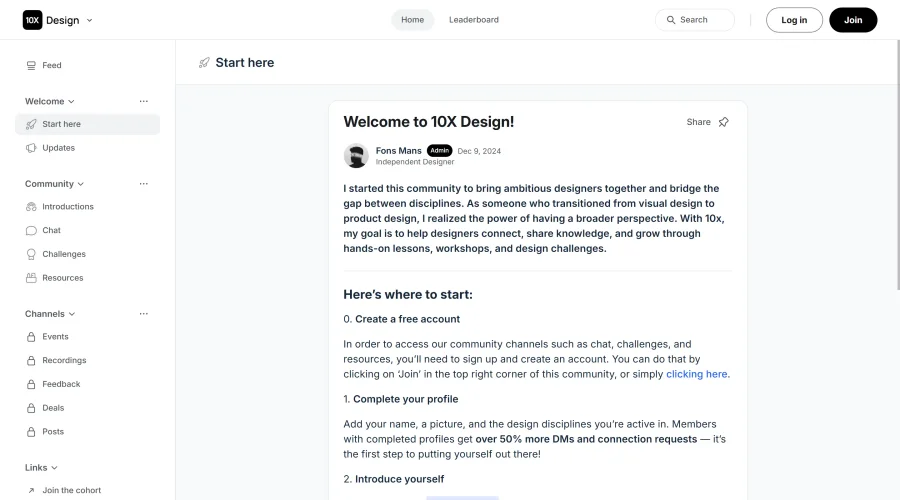

10x Designers
Broaden your design skills with this resource.


AJ Smart
Premier resource for UX/UI, design sprints, and design thinking.
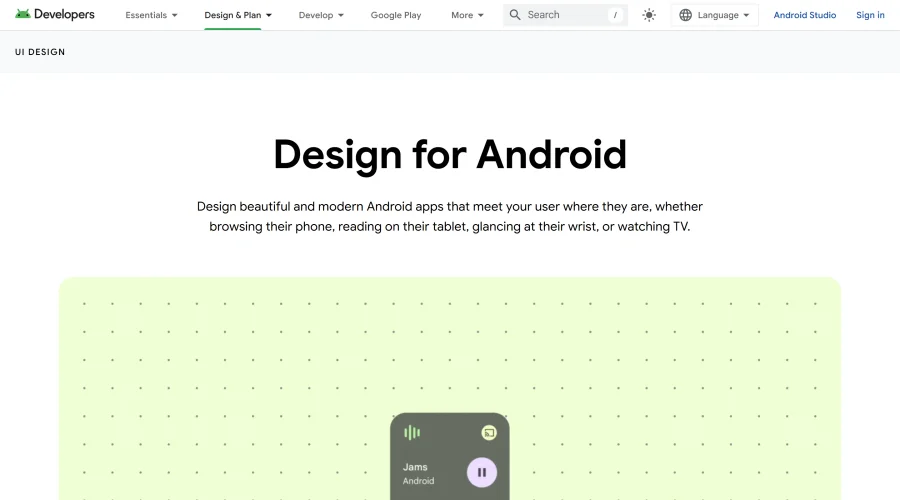

Android Design Hub
Android UI design best practices for creating beautiful interfaces.
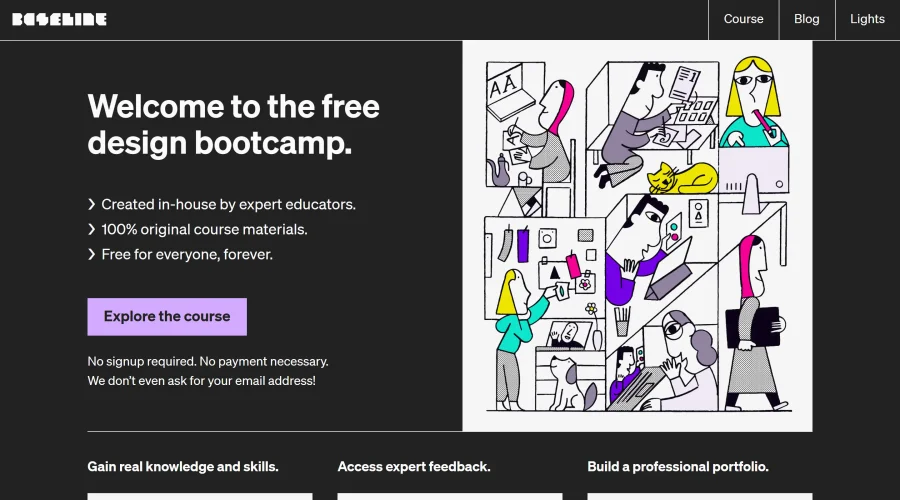

Baseline
Expertly crafted free design bootcamp for skill enhancement.
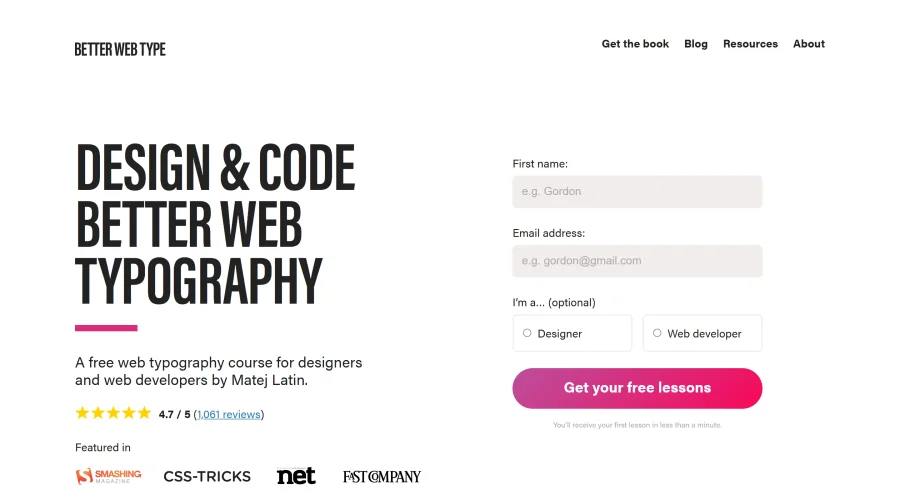

Better Web Type
Complimentary web typography course for designers and developers.
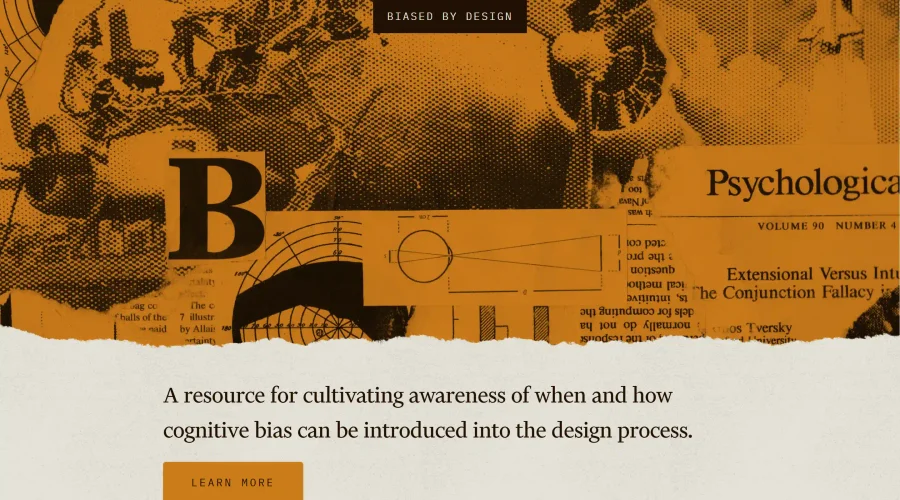

Biased by Design
Insights on recognizing and countering cognitive bias in design.
Explore Other Categories
Discover more design resources
New to Design?
Explore our comprehensive design glossary to master essential terminology from A/B Testing to Wireframes.
Browse GlossaryLooking for something specific?
Search through our entire collection of design tools and resources