

What it costs
- Free tier
- Yes
Fully free collection of UX principles; posters, cards and a book are sold separately via the author's Big Cartel store.
Auto-checked on 8 August 2026Source
About Laws of UX
What Is Laws of UX?
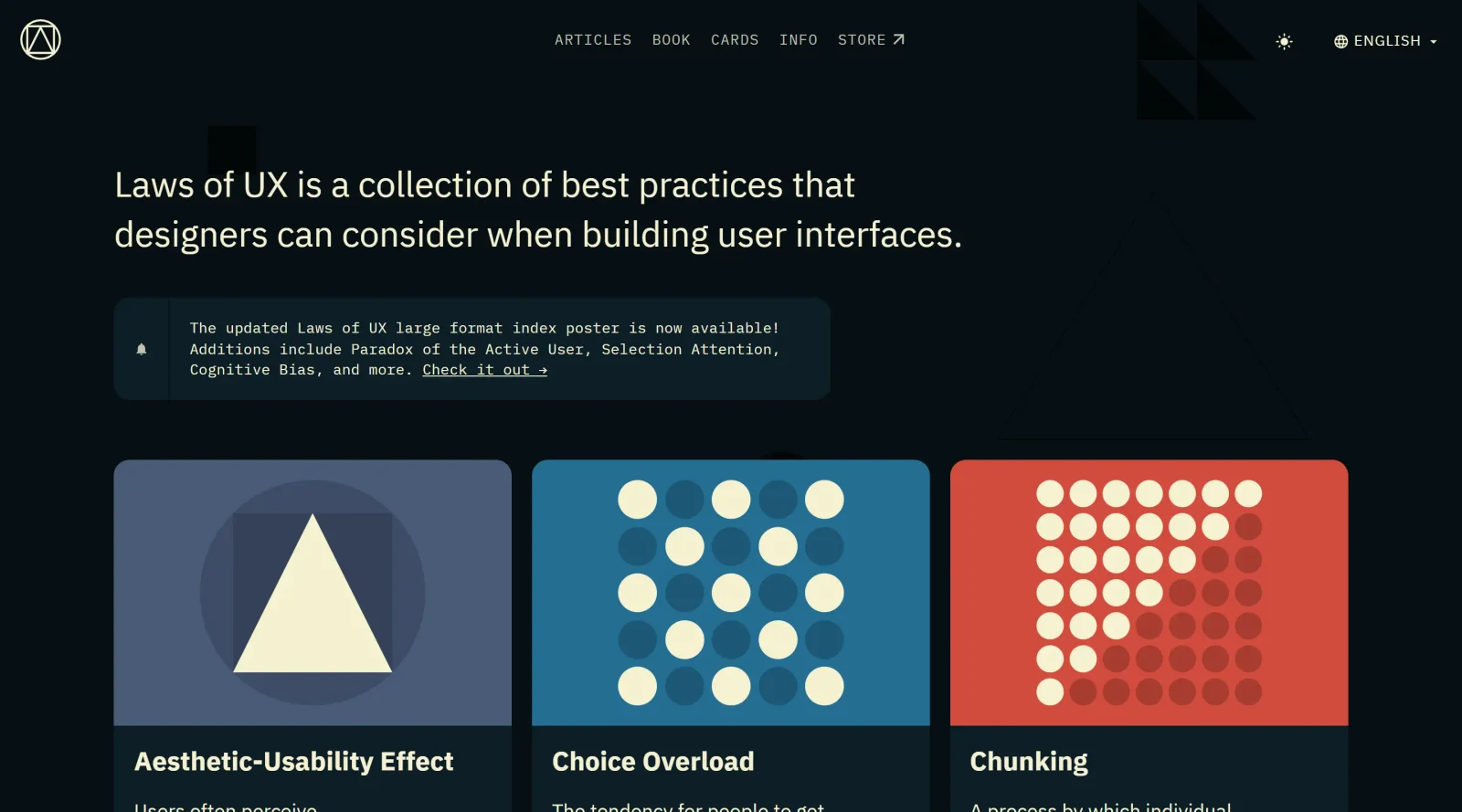
Laws of UX is a free educational resource that compiles key UI design best practices derived from psychological principles. Created by Jon Yablonski, it serves as a practical guide for applying psychology to develop more human-centered and intuitive products and digital interfaces. In the design workflow, Laws of UX fits as a reference material for UX designers and developers seeking to align interfaces with user perception and behavior patterns, particularly during ideation, research, and validation phases.
What Laws of UX Does
- Explains psychological principles relevant to UX design, such as how aesthetically pleasing design elicits positive user responses.
- Deconstructs familiar apps and experiences to illustrate applications of psychology in interface design.
- Covers predictive models including Fitts's law, Jakob's law, and Hick's law for usability predictions.
- Links psychology concepts to UX heuristics and provides techniques like contextual inquiry and user interviews.
- Addresses ethical implications of applying psychology in design processes.
- Offers a framework for integrating psychological principles into practical design workflows.
How Laws of UX Can Be Used
Laws of UX supports designers in real-world scenarios by providing quick references for decision-making. For instance, during wireframing, teams reference laws like Hick's law to limit menu options and reduce user decision time. In usability testing, principles such as Jakob's law guide consistency with familiar patterns across apps, helping avoid user confusion. Developers apply Fitts's law to optimize touch targets for mobile interfaces, improving accessibility. The resource also aids in team discussions on ethics, such as avoiding manipulative personalization, and incorporates methods like eye-tracking for validation. Overall, it functions as a reference tool throughout the design process, from initial sketches to final reviews.
Who Is Laws of UX For?
Laws of UX targets UX designers, UI developers, product teams, and researchers who aim to ground their work in psychological foundations. It suits beginners learning core principles as well as experienced professionals needing a concise reference for justifying design choices based on human behavior. Non-designers, such as product managers or stakeholders, use it to understand heuristics like Postel's law for resilient interfaces or the peak-end rule for memorable experiences. The resource applies to projects involving digital products, apps, and websites where intuitive, human-centered design is essential. Visit Laws of UX
Featured Tools
Sponsored
Artlist
Royalty-free music, SFX, 8K footage, templates, LUTs and 100+ AI models on a single subscription for video creators.

Icons8
Large icon packs featuring over 10,000 icons for consistent design themes.

Vidu
AI video generator with text, image and reference-to-video modes, producing 3–16 second clips at up to 1080p with characters that stay consistent across shots.
Your tool here
The tools above are our own picks until the slots sell.
Spotlight
SponsoredRotates daily
HyNote
Records and transcribes interviews and meetings, then turns them into summaries and action items.
More Educational Tools
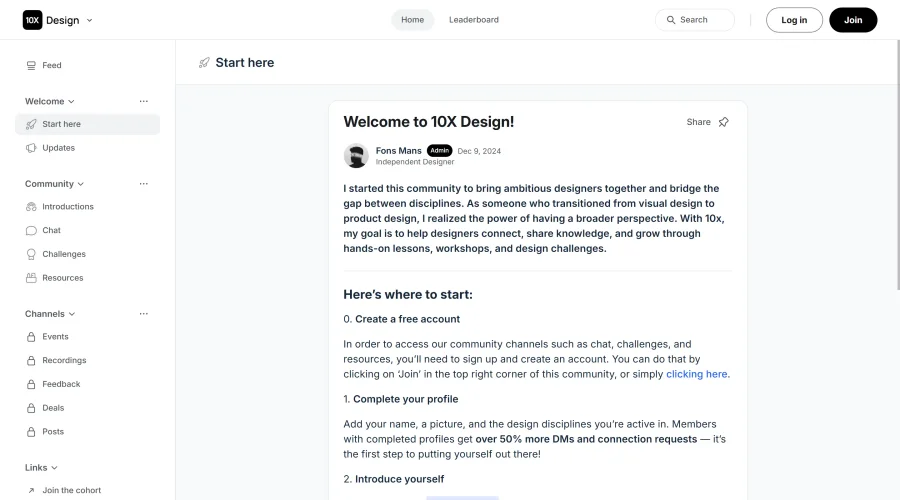

10x Designers
Broaden your design skills with this resource.
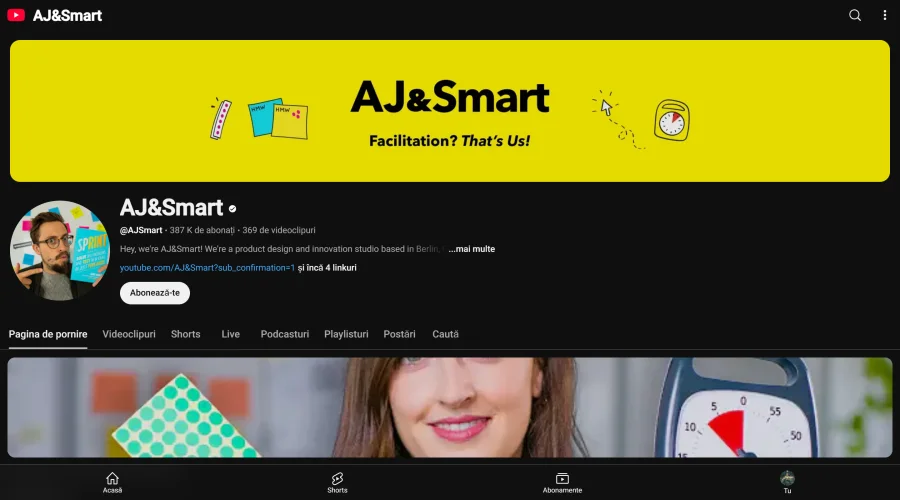

AJ Smart
Premier resource for UX/UI, design sprints, and design thinking.
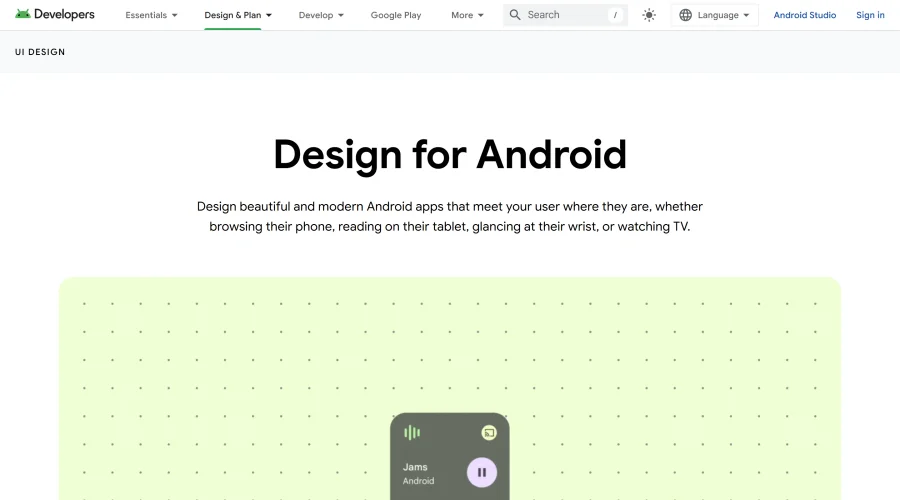

Android Design Hub
Android UI design best practices for creating beautiful interfaces.
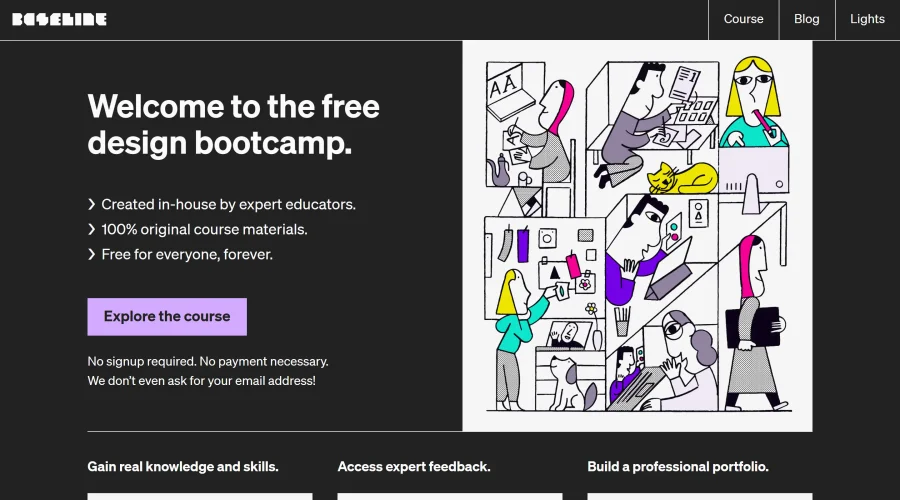

Baseline
Expertly crafted free design bootcamp for skill enhancement.
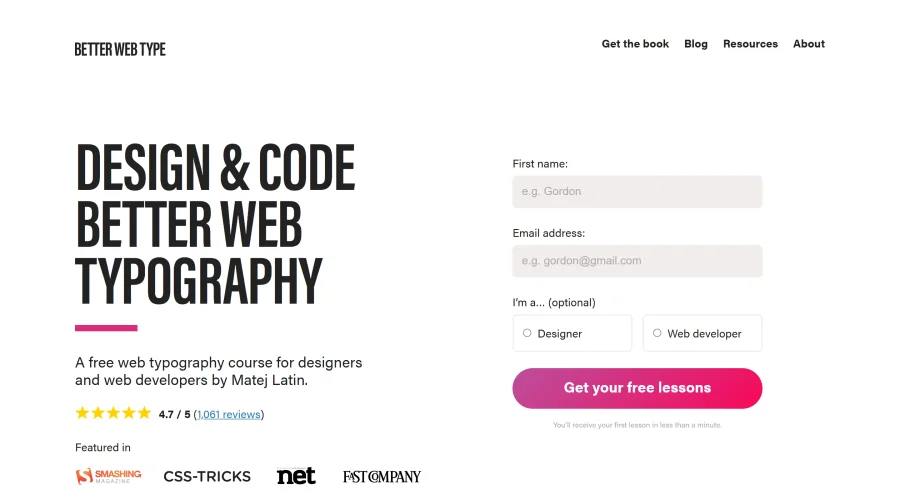

Better Web Type
Complimentary web typography course for designers and developers.
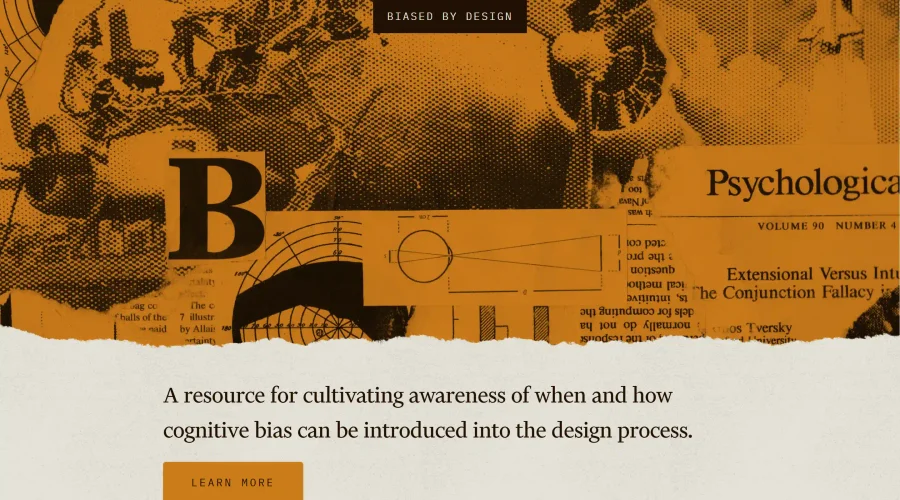

Biased by Design
Insights on recognizing and countering cognitive bias in design.
Explore Other Categories
Discover more design resources
New to Design?
Explore our comprehensive design glossary to master essential terminology from A/B Testing to Wireframes.
Browse GlossaryLooking for something specific?
Search through our entire collection of design tools and resources