
Cognitive Load
The mental effort required for a user to understand and interact with a system.
What is Cognitive Load?
Cognitive load refers to the mental effort required by users to understand and interact with a system. This concept is crucial in UX/UI design, as it directly affects user experience and usability. Cognitive load theory, developed by John Sweller, categorizes cognitive load into three types: intrinsic, extraneous, and germane.
Intrinsic Cognitive Load
Intrinsic cognitive load is the inherent difficulty of the material itself. It cannot be changed by design, but designers can guide users progressively to ease the learning process. For example, onboarding tutorials in mobile apps help users gradually understand complex features without feeling overwhelmed.
Extraneous Cognitive Load
Extraneous cognitive load arises from poor design elements that hinder effective interaction. This includes cluttered layouts, confusing navigation systems, and ambiguous icons. UX designers can control and minimize this type of load by simplifying processes, removing distractions, and using familiar design patterns.
Germane Cognitive Load
Germane cognitive load is the mental effort dedicated to understanding and processing information. Good design aims to maximize this type of cognitive load by ensuring that users focus their mental effort on learning or making decisions, rather than navigating through unnecessary complexities.
Impact on User Experience
High cognitive load can lead to frustration, errors, and user abandonment. Conversely, well-optimized cognitive load results in faster task completion, higher user satisfaction, and increased engagement. Effective design strategies include simplifying the UI, chunking information, using familiar patterns, improving visual hierarchy, minimizing choices, and providing clear feedback.
Design Strategies to Reduce Cognitive Load
- Simplify the UI: Eliminate unnecessary elements to create a clean and user-friendly interface. Google's minimalistic homepage is a prime example, focusing on essential elements without distractions.
- Chunk Information: Break down long forms or content into manageable steps. LinkedIn's profile setup process illustrates this by dividing the registration into multiple steps.
- Use Familiar Patterns: Stick to widely accepted design conventions, like the hamburger menu in mobile apps, to avoid relearning basic interactions.
- Improve Visual Hierarchy: Use whitespace, size, and contrast to guide the user's eye and highlight key actions. Spotify's prominent "Play" button demonstrates this effectively.
- Minimize Choices: Limit options to reduce decision fatigue. Netflix's "Top Picks for You" section narrows choices, making it easier for users to decide what to watch.
- Provide Clear Feedback: Ensure users receive instant feedback on their actions, such as inline validation in forms, to reassure them and reduce confusion.
Cognitive Load in Real-World Scenarios
- Cluttered Layouts: Web pages filled with banners, pop-ups, and animations increase extraneous cognitive load by forcing users to filter out distractions instead of focusing on content.
- Complex Navigation: Websites with ambiguous labels and complex menu structures add unnecessary cognitive load by requiring users to work harder to find what they need.
- Ambiguous Icons: Icons without clear meanings force users to guess their purpose, increasing cognitive load. Pairing icons with text labels can resolve this issue.
- Information Overload: Presenting users with excessive details can be overwhelming. Breaking information into smaller, digestible chunks is essential for reducing cognitive load.
Conclusion
Understanding cognitive load is essential for creating user-friendly and efficient interfaces. By recognizing the types of cognitive load and implementing strategies to minimize extraneous load, designers can enhance user experience, leading to increased satisfaction and engagement. This approach not only benefits users but also contributes to the overall success of digital products by ensuring that interactions are intuitive and seamless.
Explore Other Terms
A/B Testing (Split Testing)
ResearchComparing two versions of a design or feature to see which performs better.
Adaptive Design
UICreating distinct layouts tailored for specific screen sizes rather than using one responsive layout.
Alignment
GraphicArranging elements so their edges or centers line up, promoting order and unity.
Aspect Ratio
UI / GraphicThe proportional relationship between width and height of an image or screen (e.g., 16:9).
Atomic Design
UIA methodology breaking UIs into basic building blocks (atoms, molecules, organisms) for consistency and scalability.
Balance
GraphicThe visual distribution of elements in a layout; can be symmetrical, asymmetrical, or radial.
Explore Design Tools
Discover tools that help you apply cognitive load in your work.


Artlist
Royalty-free music, SFX, 8K footage, templates, LUTs and 100+ AI models on a single subscription for video creators.
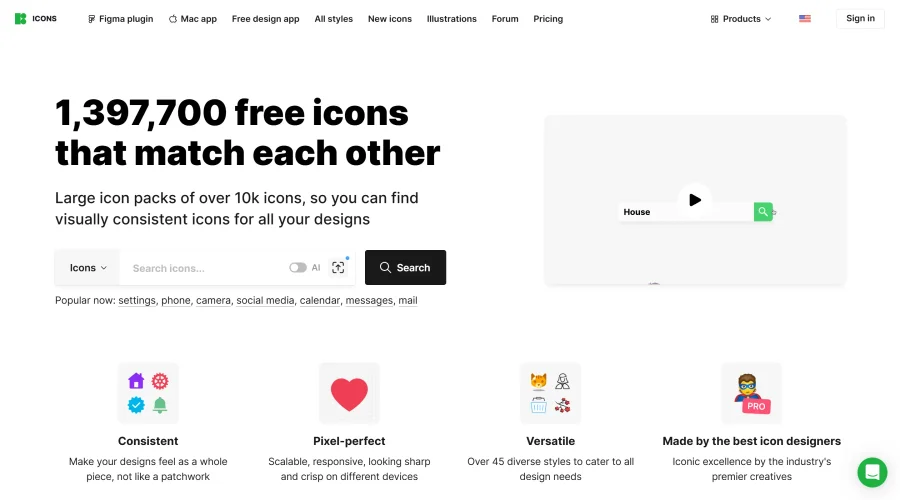

Icons8
Large icon packs featuring over 10,000 icons for consistent design themes.


Vidu
AI video generator with text, image and reference-to-video modes, producing 3–16 second clips at up to 1080p with characters that stay consistent across shots.
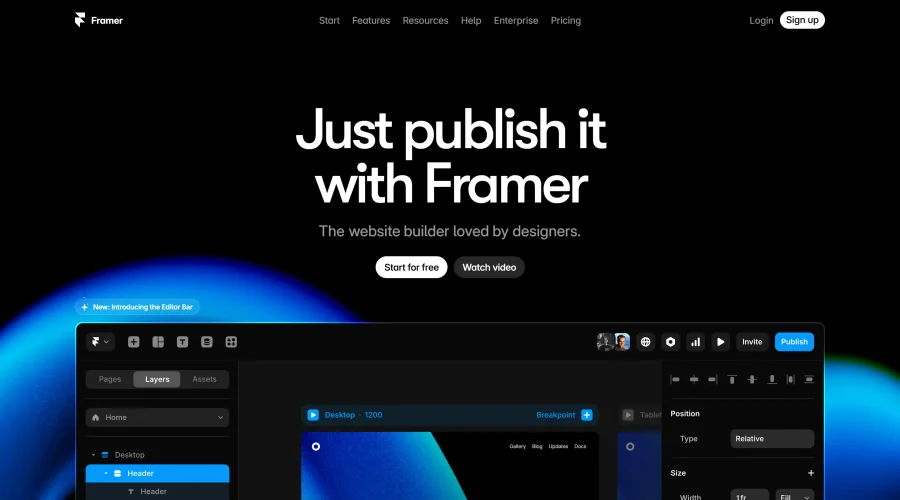

Framer
Design and launch your dream website with no coding required.
Continue Your Learning Journey
The design glossary is just the beginning. Explore more terms, discover tools, and level up your design skills.