
Fitts’s Law
Predicts the time to move to a target area (like a button) based on the target’s distance and size.
What is Fitts's Law?
Fitts's Law is a foundational principle in UX/UI design, predicting the time it takes for users to move to a target area, such as a button, based on its distance and size. This law, developed by Paul Fitts in 1954, is crucial for optimizing digital interfaces by enhancing user interaction speed and accuracy.
Introduction to Fitts's Law
Fitts's Law is a predictive model that explains how the size and distance of targets affect user interaction times. It is widely applied in human-computer interaction and ergonomics to improve the usability of digital interfaces. The law is based on the concept that the time required to move to a target area is a function of the ratio between the distance to the target and the width of the target.
Key Components of Fitts's Law
- Distance (D): The distance from the starting point to the center of the target.
- Width (W): The width of the target, which represents the allowed error tolerance.
- Index of Difficulty (ID): Calculated as (\log_2\left(\frac{2D}{W}\right)), it measures how challenging it is to reach the target.
- Movement Time (MT): The average time taken to complete the movement, influenced by ID.
Applications of Fitts's Law in UX/UI Design
Fitts's Law is essential for designing intuitive and efficient user interfaces. By applying its principles, designers can:
- Optimize Button Placement: Positioning buttons closer to the user's typical cursor position can significantly reduce interaction time.
- Size Targets Appropriately: Ensuring that targets are sufficiently large reduces the difficulty of reaching them, especially for smaller screens or touch interfaces.
- Improve Navigation: Designing navigation menus with Fitts's Law in mind helps users quickly access desired options.
Impact on User Experience
Fitts's Law contributes to a better user experience by reducing errors and improving the speed of interactions. This is particularly important in mobile and touch-based interfaces, where precision can be challenging. By understanding how distance and size affect user interaction, designers can create more accessible and user-friendly interfaces.
Mathematical Formulation
The mathematical formulation of Fitts's Law is typically expressed as:
[ MT = a + b \times ID ]
where (a) and (b) are constants that depend on the input device and user characteristics. This equation highlights the nonlinear relationship between movement time and index of difficulty.
Real-World Examples
- Mobile App Design: In mobile apps, placing frequently used buttons at the bottom of the screen, closer to the user's thumb, reduces interaction time and improves usability.
- Web Navigation: Designing web menus with large, easily accessible targets can enhance user navigation speed and reduce errors.
Conclusion
Fitts's Law is a fundamental concept in UX/UI design, offering insights into how to optimize digital interfaces for faster and more accurate user interactions. By understanding and applying this law, designers can create more intuitive and user-friendly interfaces that enhance overall user experience.
Explore Other Terms
A/B Testing (Split Testing)
ResearchComparing two versions of a design or feature to see which performs better.
Adaptive Design
UICreating distinct layouts tailored for specific screen sizes rather than using one responsive layout.
Alignment
GraphicArranging elements so their edges or centers line up, promoting order and unity.
Aspect Ratio
UI / GraphicThe proportional relationship between width and height of an image or screen (e.g., 16:9).
Atomic Design
UIA methodology breaking UIs into basic building blocks (atoms, molecules, organisms) for consistency and scalability.
Balance
GraphicThe visual distribution of elements in a layout; can be symmetrical, asymmetrical, or radial.
Explore Design Tools
Discover tools that help you apply fitts’s law in your work.
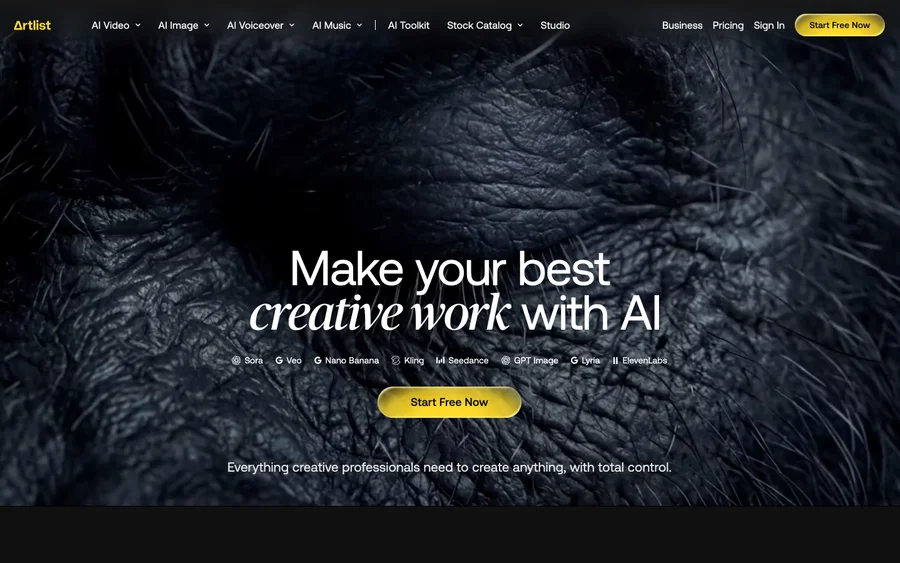

Artlist
Royalty-free music, SFX, 8K footage, templates, LUTs and 100+ AI models on a single subscription for video creators.
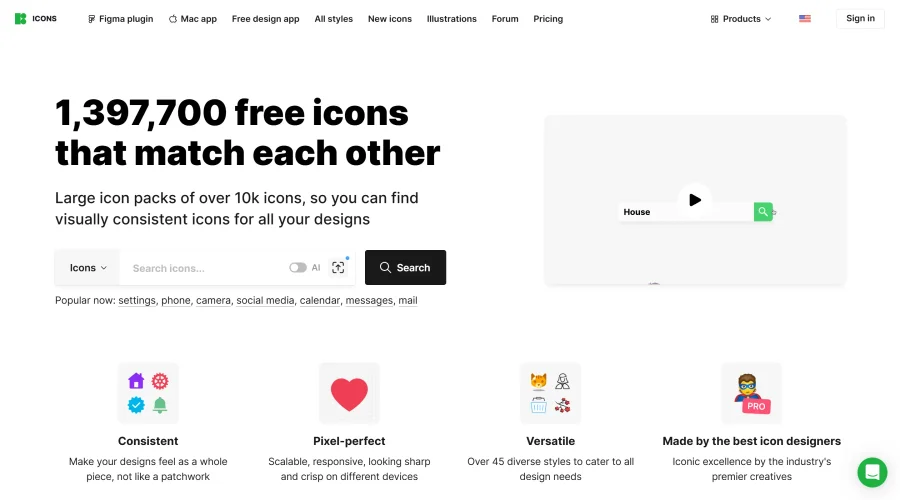

Icons8
Large icon packs featuring over 10,000 icons for consistent design themes.
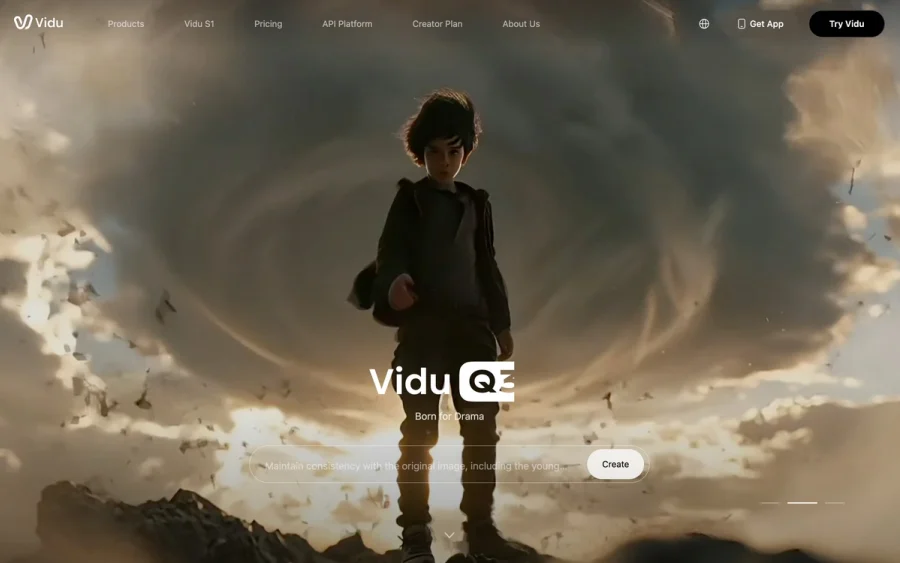

Vidu
AI video generator with text, image and reference-to-video modes, producing 3–16 second clips at up to 1080p with characters that stay consistent across shots.
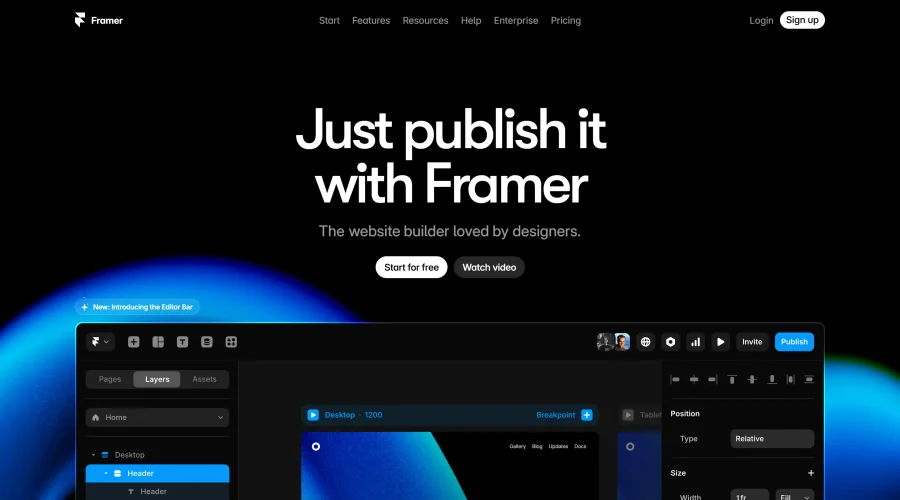

Framer
Design and launch your dream website with no coding required.
Continue Your Learning Journey
The design glossary is just the beginning. Explore more terms, discover tools, and level up your design skills.